The Identity Story
Developing a “dual-path” brand strategy to monetize an invisible music catalog.
Project: Strategic Brand Audit & Campaign Proposal (Speculative)
The Narrative Arc: Revitalizing a legacy asset.
Role: Brand Strategy & Design (Case Study)
Context: Recruitment Challenge / Strategic Pitch

Challenge
Asset: A massive music licensing catalog holding the rights to cultural hits like The White Lotus and Narcos.
Problem: The company had “cultural capital” (great music) but little “social presence” (no brand). They were invisible to the modern “creator economy”.
Goal: To transform a static database of songs into a desirable brand that could attract two conflicting audiences: Gen Z creators (B2C) and music supervisors (B2B).

Insight
One size does not fit all. My research revealed that our target audiences had opposing psychological needs:
Gen Z creators want “vibes”, emotion, and narrative. They buy identity.
Industry buyers want reliability, speed, and prestige. They buy authority.
Instead of forcing a compromise, I developed a dual-path strategy to A/B test which narrative would drive higher conversion.
Solution
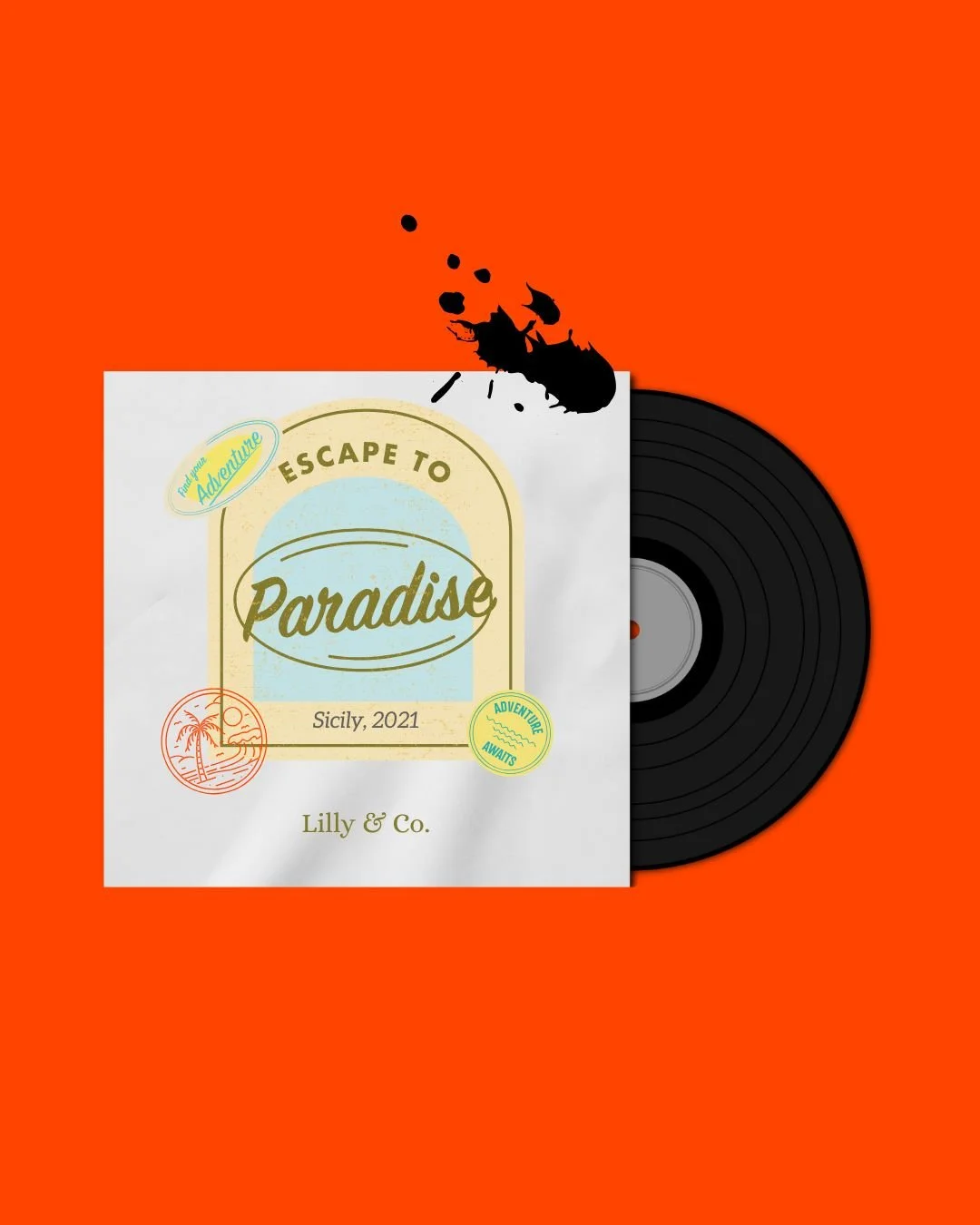

Path A: The Creative Approach (“False Paradise”)
Target: Gen Z, Cinephiles, “Vibe Seekers”.
The Concept: Repositioning the catalog as a “curator of atmosphere”. We stopped selling “tracks” and started selling “scenes”.
Visual System: The “vinyl” aesthetic. Using textured, vintage record templates to turn digital files into collectible art.
Content Strategy: POV Storytelling. Pairing beautiful visuals with unsettling captions (e.g., “POV: You’re in paradise, but you can’t leave”) to trigger the “main character energy” trend.
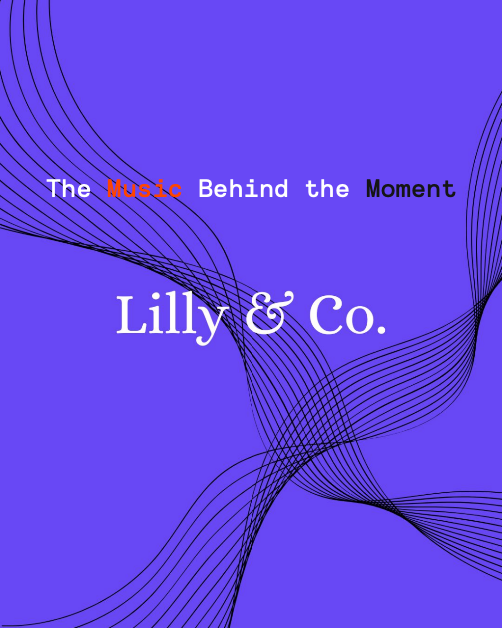
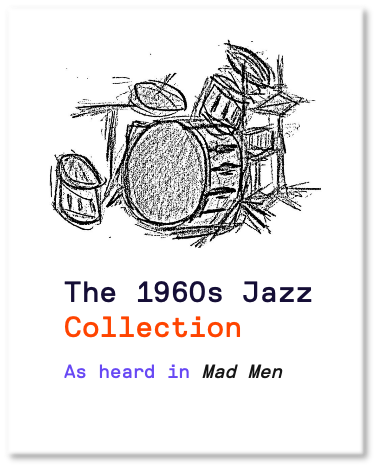
Path B: The Traditional Approach (“The Sync Authority”)
Target: Music Supervisors, Directors, Corporate Investors.
The Concept: Repositioning the company as a “legacy institution.” We stopped telling stories and started showcasing our track record.
Visual System: The “corporate” aesthetic. Minimalist, high-contrast audio waveforms. No filters, just clarity.
Content Strategy: The Flex. Static posts highlighting awards (“Academy Award Winning Sound”) and direct placement credits (“As heard in Mad Men”).
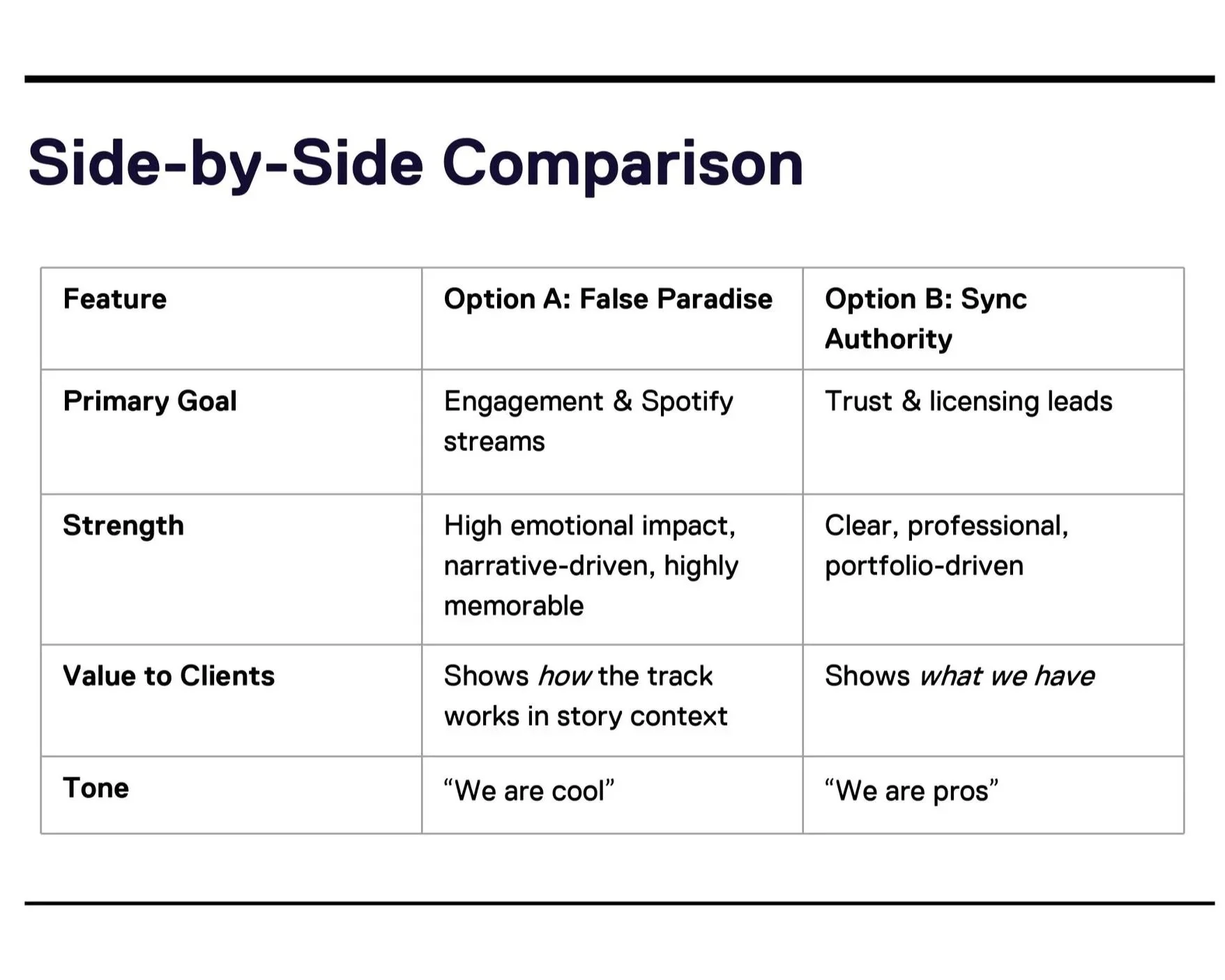
Methodology: A/B Testing
Strategy requires validation. I proposed a 24-hour pilot test to measure resonance before scaling:
Test A: A “Vibe Switch” Reel (Emotional) → Measured by saves & shares.
Test B: A “Sizzle” Reel (Corporate) → Measured by website clicks.
This framework allows the company to invest budget based on real data, not just creative intuition.
“Pilot Test”
Appendix

Narrative Arc: Visualizing the sonic shift from “Paradise” to “Nightmare”, using the branded colors.
A Social Researcher’s Lens:
In social theory, objects have no inherent meaning, but only the meaning we ascribe to them through social interaction.
To a Gen Z creator, a “vinyl record” isn’t just a format; it is a symbol of authenticity in a digital age. To a corporate buyer, a “waveform” isn’t just a graphic; it is a symbol of precision. My strategy didn’t change the product (the music); it changed the social symbols wrapping it, allowing two different groups to derive two different meanings from the same asset.